
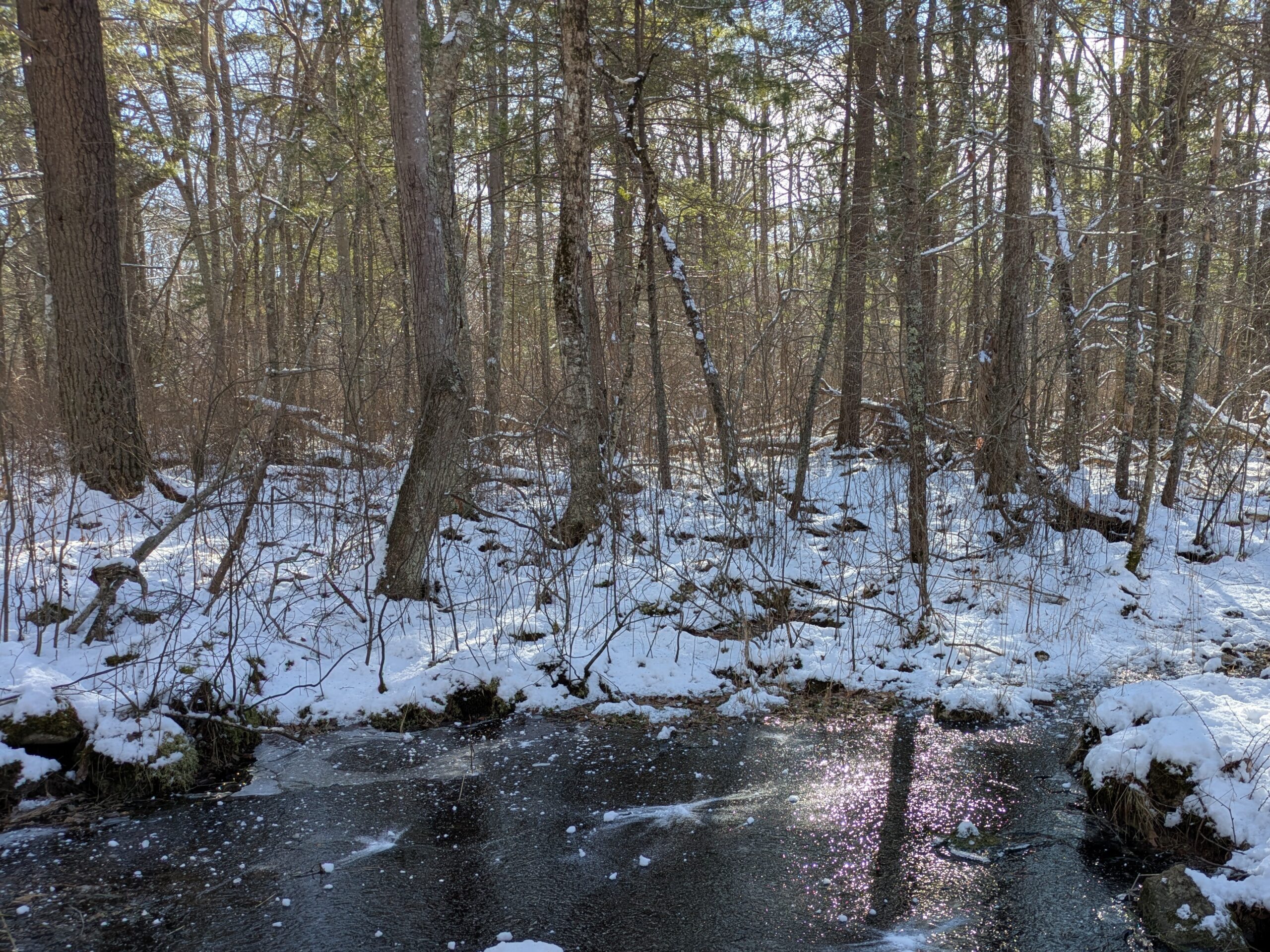
A large, pristine landscape often evokes wonder and inspires mythology. We imagine these landscapes with iconic trees, a thick understory, and a plethora of wildlife inhabiting a variety of ecosystems–think of the mangroves along the Gulf Coast, the towering Sequoia to the West, or the Pine Barrens of New Jersey. The capacity for these spaces to hold such a diverse array of plant and wildlife and folkloric creatures can largely be determined by acreage.
Southern New England is sadly lacking in bigfoot sightings, but bigfoot’s need for large contiguous habitat is also a necessity for some of our most iconic wildlife including bear, coyotes, and the elusive bobcat. It is always exciting to spot one of these creatures and we have evidence of them right here in Westport!


These trail cam snapshots were captured in late Fall 2025 by Mark Souza and shared on Facebook.
Trails that Preserve Habitat
Here at WLCT we strive to knit together large pieces of land to create these corridors that, in theory, will support greater diversity of both plants and animals. This is accomplished by expanding existing preserves through strategic land preservation. Once acquired, the land is assessed by staff and key areas with high ecological value are identified. By centering the needs of wildlife and plants, visitors to our trails are able to experience Westport’s varied habitats, while also ensuring large sections of land remain untouched and productive.

Analyzing the ecology of the land we acquire allows us to integrate public access while encouraging large undisturbed corridors to be as productive as possible. It is unlikely that a colony of fairies is waiting to be discovered in the newest portion of Westport Woods. However, the hundreds of acres of dense undisturbed forest at Westport Woods certainly support large scale raptor and bird populations–especially in these cold winter days. This goes beyond Westport and expands into larger chunks of land such as watersheds. When each town or region conserves land larger and larger networks and corridors are created, all of which support more diversity.

Homeowners can contribute to these corridors by creating native plant gardens on their homestead, what entomologist Doug Tallamay calls a “homegrown national park.” When we create backyard corridors in concert with larger conservation areas we expand the habitat beyond the confines of any particular conservation area. This creates the opportunity to see some of our most interesting birds and animals right from our doorstep!
You don’t have to do much to support these mythical open spaces. If you are interested in going further, join WLCT for a program, volunteer for a stewardship project, or simply support land preservation in your community.