
As the days shorten and grey skies loom overhead it can be easy to forget the beauty and
wonder our gardens provided for much of the year. Green foliage and colorful blooms occupied these spaces until hard frosts in late November cued our flora to drop its leaves and go dormant. Alas not all is lost as there is beauty to be had in our gardens all year long. We just need to know where to look and sometimes change “how” we look.
Let Them Rest
To start, don’t cut back your perennials until spring. Texture and structure become the visual
feast come winter with trees, shrubs and perennials revealing their intricate shapes and
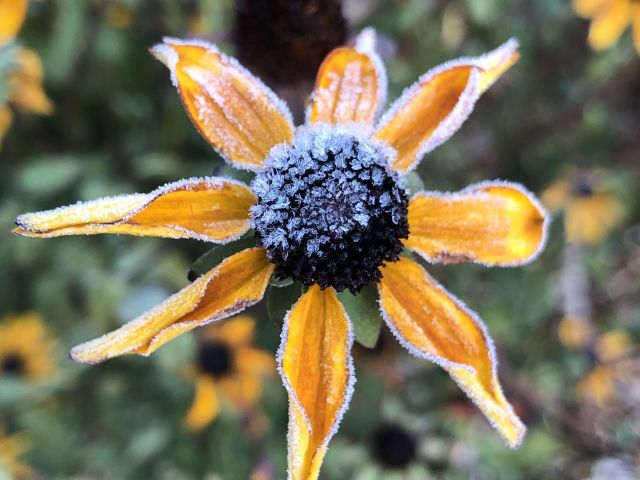
branching structures. It is in this space we must look for the beauty be it the frost on the top of a seed head or a light snow resting on a branch.
Native Species Shine
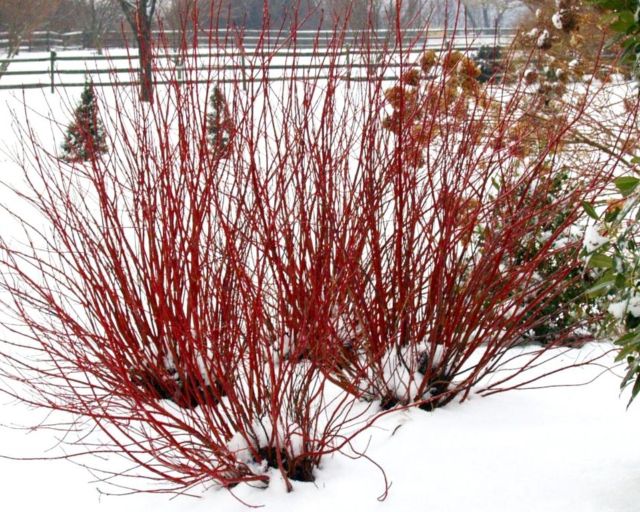
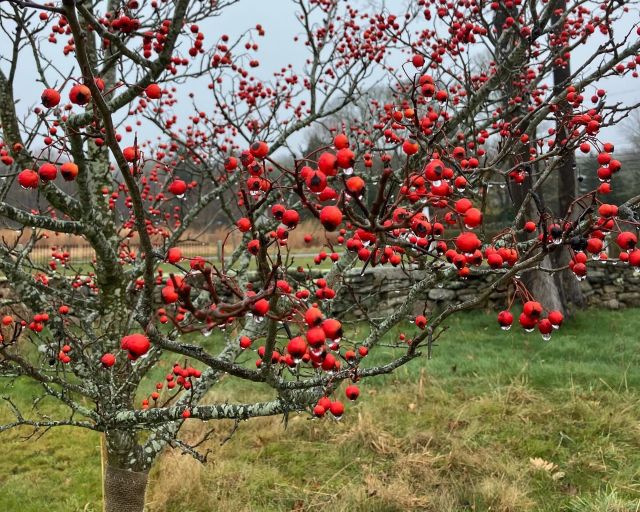
Native plants’ special features become more evident in winter months, providing bright contrast to the grey days. Some that come to mind include the River Birch with its white peeling bark and the Red Twigged Dogwood with its bark that deepens in red color as the days get colder. The structure and berry set of the Hawthorne are not to be forgotten either along with the vase-like shape of Witch hazel.

Perennials like Swamp Milkweed and Black-eyed Susan provide structural elements as well with stiff stalks strong enough to hold a blob of snow on top. For semi-evergreen perennials like Heuchera and Christmas Fern their frost covered edges in the morning sun are nothing short of amazing. Of course we must not forget our native evergreens, especially the female American Holly with its glossy leaves and bright red berries.
Winter is a great time to observe one’s gardens, take a good inventory and begin brainstorming for what comes next when spring arrives once again.


