
Earlier this week, I led a group of intrepid explorers on a scavenger hunt around Westport Woods. On the itinerary for our expedition: the sights and sounds of springtime. These early days of spring bring with them the pioneers of the season. When we tune our senses, we can see, hear, and smell the nascent season.
Early Bloomers
Those first signs are evident through our windows, as the lawn and meadows start to green. Sure enough, just beyond the doors of Kirby House, crocuses are popping up with their purple petals opening up mere inches from the ground. Tulip leaves tantalize visitors at the South-facing front door. In the native plant garden, the witch hazel is in full bloom, its yellow ribbons a signpost towards the warmer days to come. Step out onto the East-side yellow trail as it passes over the bridge and you’ll see the dark hoods of skunk cabbage, the first flower of our woods.

Sound Evidence of Wildlife
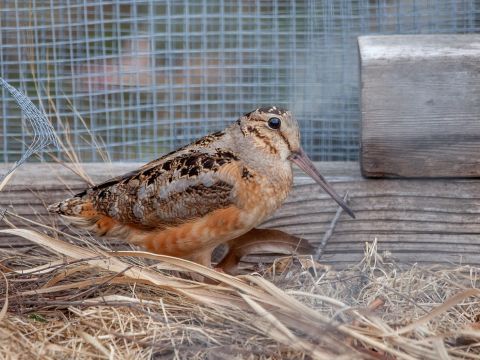
The early days of spring are also an awakening for the wildlife that call Westport home. Turkey vultures have returned to their rookery on the west side of the Westport Woods meadow and a pair of Red-Tailed Hawks are setting up home (and telling everyone about it) behind the Stewardship Shop. If you are here after sunset, you may hear our resident woodcock or even see his spiraling mating dance!
With the equinox behind us, the tiny spring peeper is beginning to make itself known here and there. Open you door and you can hear its chorus well into the night. You may already be hearing the resounding, duck-like song of the wood frog. On these early warm nights, when there is moisture in the air, you may be lucky enough to witness the “Big Night” of our native salamander species–specifically the Spotted Salamander–who make their first coordinated migrations between vernal pools to breed.
Wood frogs calling on a sunny afternoon at the vernal pool.
Vernal Pools
Vernal pools are unique habitats found in wooded areas across New England. What makes a vernal pool different from other bodies of water? The basic definition is a temporary pond, one without incoming or outgoing streams, that fills with the winter rains and dries out in the summer. That drying out means fish cannot establish themselves, allowing for the reproductive success of the amphibians and invertebrates (frogs, salamanders, and fairy shrimp, to name a few) that use the pools to breed.
Observe the muddy terrain around these locations, and you will surely find interesting tracks; coyotes, for instance, will come around, looking for a meal. On our walk this week, we saw White Tail Deer fur floating on top of the water, evidence of a recent visit!
Check the pool edge weekly! As the spring season continues, certainly by late April, you’ll notice masses of eggs laid by those amphibians who have made the dangerous journey to mate and continue their life cycle.
Sensational Sensory Finds
There are many other conspicuous features that unveil themselves in the early spring. Late snow and spring rains bring the sound of rushing water to our streams and brooks; even a rain gutter can be a source of unusual joy as a spring rain returns. Color hazes along the tree line: reddish where there are maples and the yellow of willows. Stop at your favorite tree and you’ll notice bright greens and reds of new buds. On some trees, branches might be “spiky,” anticipating the emergence of those leaves.
Perhaps the most satisfactory sense of spring is earthy smell that we begin to notice. That smell accompanies the first days of rain after a long winter, and is made by a chemical compound called geosmin. This is produced in the soil by a bacteria in the warming earth. When we sense the smell of rain (petrichor), that is geosmin! There is no better way to welcome back the warmth of the new season than by noticing these warm, earthy scents and all of the sensations that they bring.
If you are looking for more ways beyond your own backyard to explore the sounds of spring, join us for one of these April programs:
- South Coast Stroll: Herb Hadfield, Thursday April 9th
- Vernal Pool Exploration, Saturday April 18th
- Earth Day Celebration (with kites!), Wednesday April 22nd
header photo: Pavel Hanc, March 2022