
As we enter year three of the grassland meadow restoration at Dunham’s Brook, we are starting to see this evolving ecosystem become a thriving place for plants, people and animals alike. In 2023, WLCT reseeded the 15-acre former cornfield with a mix of four native grasses: Panicum virgatum, Sorghastrum nutans, Schizachyrium scoparium and Andropogon gerardii. Commonly known as Switchgrass, Indian Feather, Little Bluestem and Big Bluestem, this team of grasses is now fully established in combination with existing cool season varieties, and the benefits are starting to show! These warm season grasses to reestablish several areas as they were once prominent across the United States. Local species, they support local wildlife in a variety of ways and encourage greater biodiversity.
Soil Builds Habitat
Restoration began in 2023 with the seeding of an aggressive cover crop to help build up organic matter, break up compacted soils, and outcompete undesirable plants. This was repeated twice (once in the fall and once in the spring) in order to help build the depleted soils that had been over-farmed and eroded. Once a good base of soil was available the native seed mix was broadcasted over the area in the fall so that the seed could stratify and start to germinate the following spring. A cover crop of winter rye was used to help prevent erosion.

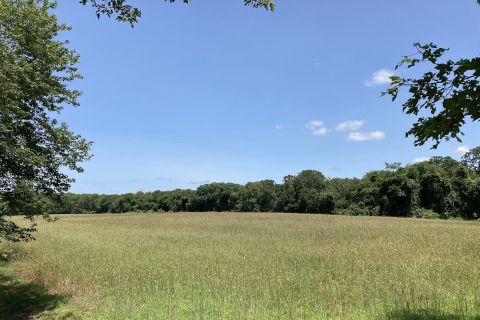

Year one and two required multiple mowings with a brush hog on our tractor. These mowings reduced the regeneration of the cover crop and prevented weeds from going to seed, while also allowing light and water to reach the small perennial seedlings at ground level. This process is necessary, but it does cause disturbance to the restoration site which can deter wildlife temporarily. Year three saw a huge increase in mature species all of which went to seed, adding to the native seedbank that will help this grassland proliferate!


Over 500 native shrubs were also planted as part of the restoration in three key areas to encourage habitat for small mammals, reptiles/amphibian, and birds. Shrubs with seed sources for birds began to thrive while creating shelter for small animals. The endangered box turtle was spotted on the field edges this past year, providing living proof this area is regaining its ecological glory!
Restoring the crest of Dunhams to grassland created a more vibrant place for humans to enjoy, as the variety of wildlife has increased along with the visual splendor of the tall grasses swaying in the wind. The addition of the “shrubby edges” is crucial for increasing bird diversity on site. Many species of birds prefer a field edge to rest, connect with their species and choose the next location to forage for food. This layered landscape allows for safe travels from the forest to the grassland.
Management Matters
Now that we have achieved maturity in both the grasses and shrubby edges, management is getting easier. One mowing per year in late winter/early spring helps to knock back any unwanted woody species and mulch the native grasses to prevent matting. It also helps disperse seed and adds organic matter back into the soil. Twice a year, we explore the grassland with a walkthrough to remove invasive species like autumn olive and Canadian thistle. The area may look barren for the spring, but these warm season grasses will begin to grow again in late May growing into a vibrant grassland by July. Come check it out in all its stages this year and keep an eye out for amazing wildlife such as deer, coyotes, a plethora of birds and the elusive box turtle!