
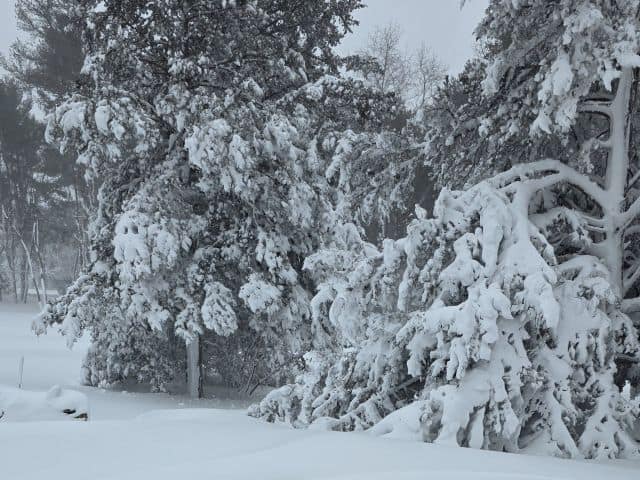
With tons of wet and heavy snow falling this past week, it’s likely there will be some damage to trees and shrubs. The wind and heavy snow took down several snags and branches across WLCT’s properties. We expect quite a few trail reports in the coming weeks! While some issues may not reveal themselves until the snow melts, others may be immediately visible. Don’t fret! We’re all experiencing the same thing and can all take the proper steps to assess, salvage, and in some cases, repair the damage.
Snapped or split branches
First check the large trees around your buildings and parking areas. Are there hanging branches that might fall in wind or more snow? For smaller trees, a pole saw would be appropriate to cut and remove snapped or split branches.
Using the undercut method gives your tree the best chance to heal. Start with an undercut (less than 50%) and then cut from the top of the branch.

Peeling bark makes trees susceptible to disease and pests, while leaving too much of a branch makes it harder for a tree to heal the cut. Cuts should be made as cleanly as possible. Every effort should be made to prevent the bark from peeling past the connection point to the main branch or trunk. If possible remove the entire branch back to the growth collar, again off a large main branch or the trunk itself.
Take Care!
Do not use a ladder when using a chainsaw or pole saw as this can be extremely dangerous. It only takes one moment of misuse to create a really dangerous situation. If the branch or partial trunk is large, it may be best to contact your local arborist to come assess the situation and complete the work safely. No tree is worth getting hurt over.
You can find additional information on pruning snapped branches in this article we posted in November.

NOt Snapped?
By shaking the branch or tapping it with a stick/pole you should be able to remove the snow and allow the branch to release.
Many branches are overburdened with heavy snow, or partially buried — they’ve leaned over quite a bit, but have not snapped or broken yet. Be mindful of where you stand as the snapback could be quick and possibly hit oneself when releasing. This method works well on small trees and large shrubs.
Let the snow cover them
Smaller shrubs are in most cases completely buried, giving no opportunity to assess the damage visually. Do not try to dig out these small shrubs, as you may cause more harm than good. As the snow gradually melts, continue to check for small snaps and remove damaged branches as needed with hand pruners or larger loppers if necessary. The shake off method can be deployed as well, just use your discretion for best timing.
Repair Is Possible
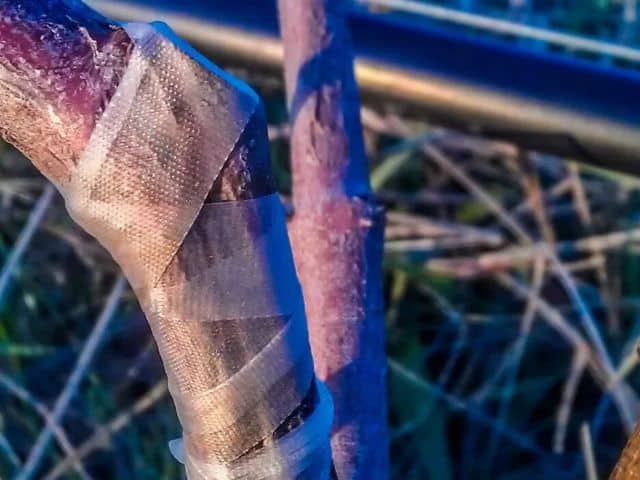
Damage to trees or shrubs can often be repaired using simple tools and materials we all have in our homes including screws, washers, cellophane wrap or duct tape. Many spits occur at “Y” junctions on the stems, but still have plenty of connective tissue holding it together. Securing this connective tissue back into its original position oftentimes allows for the wound to heal over the course of the coming season. Screws and washers can be used for larger branches, just remember to predrill a pilot hole first. For smaller separations cellophane or duct tape can be used to rejoin the split.
When repairing a large split, you want to get as tight a union of the two sides as possible. Use tape or cable ties to hold the sides together and try to relieve as much pressure as possible on the broken branch.
Save the Snags!
WLCT’s land stewardship on trails doesn’t often employ these repair tactics; we concentrate on a plant’s survival through minimizing the damage. In the woods or trailside, if a tree or shrub is beyond repair, that is OK too. We allow it to fall to the forest floor and contribute to the future of the ecosystem as it degrades. Clearing out snags (dead trees) prevents future forest health, so do your best to leave fallen snags and debris as often as you can!