
When managing healthy vernal pools, the hands-off approach is key. In order to protect the fish-free, temporary water basins, it is critical to have a buffer canopy of upland forests. The frogs and salamanders that breed in vernal pools primarily live on the forest floor, making it crucial to have cool zones surrounding them. These “no disturbance” zones help ensure water quality and provide shade, creating an ideal breeding habitat.
Vernal pools fill in cool months from rising groundwater and precipitation, and dry out in warmer months. As they don’t fill or empty from streams, they are (generally) fish-free, and many native species of amphibians–frogs and salamanders–lay their eggs in them. There needs to be enough still, cool water for the eggs to mature and grow from tadpoles or larva to mature frog or salamander, without drying out.
Keeping cool
Maintaining a canopy cover of approximately 75% helps ensure that the pools remain at a desirable temperature and don’t dry out too early, before the amphibians mature. Another crucial element is preventing physical disturbance with machinery and avoiding the use of chemicals. Even when dry, using machinery can ultimately alter the hydrology in a negative way. While invasive plants must be managed to maintain overall health, the use of chemicals will likely have a net negative impact on water quality and cause potential harm to all the living organisms in the vernal pool. Using manual removal for invasive species is considered best practice.

Healthy Forest System
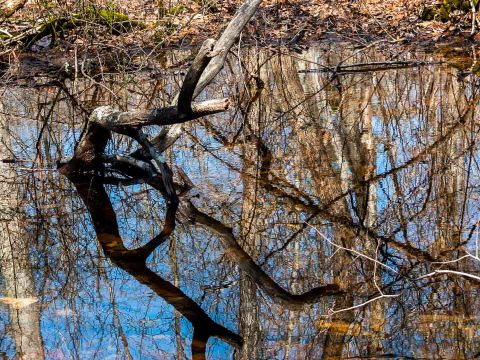
Overall management extends beyond the pool itself, with healthy forest systems ideally extending upwards of 1,000ft from the pool itself. Retaining woody debris in the vicinity is another key feature that will help to provide shelter and moisture for migrating amphibians. This means leaving logs, brush piles and fallen trees in place. Fallen limbs in the pool also provide a key function for egg sacs and shelter. If management must occur for forestry or other purposes it is ideal to conduct when frozen or very dry to minimize impact. Again, an emphasis on leaving slash piles and debris in the general area is ideal for habitat. A damp, shaded, and forested upland is the goal in the surrounding areas.
We hope you’ll visit our certified vernal pool at Westport Woods Conservation Park, but be sure to leave your dog at home, as minimal disturbance is best. Check out one of our guided programs to learn more and for a chance to see salamander eggs, frog eggs and possibly fairy shrimp!